Electronic Cargo Seal for Containers
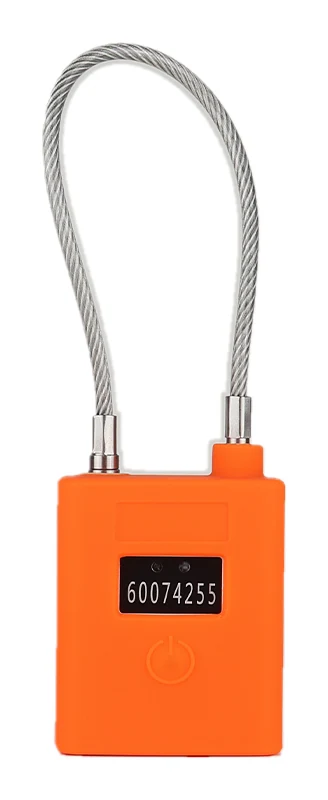
An electronic cargo seal for containers and box trucks that goes back on the next trip. It records who sealed the doors and who released them, where and when, and it will not open for anyone the platform has not authorised.
A bolt seal proves very little
A disposable seal records one thing: that it was still in one piece when someone looked. It does not say who fitted it, whether the doors were opened on the way, or who was allowed to open them.
Sealing goes on the record
Anyone can snap a bolt seal shut. Here the act of sealing goes through the app as well, so the record shows who sealed the load as clearly as who opened it.
Breaks reported, not discovered
A cut bolt seal is found at the destination. A cut cable on the 4G or LoRa version is reported the moment it happens, with the vehicle still on the road.
No key, no seal stock to leak
The seal opens only on an encrypted command authorised by the platform, for a named person, a place and a time window. There is no key to copy and no stock of seals to go missing.
Seal at loading, release at destination
Create the trip
The dispatcher creates the task on the platform — waybill, vehicle, driver, consignee and delivery point — and authorises the right people for the right place and time window.
Seal the doors
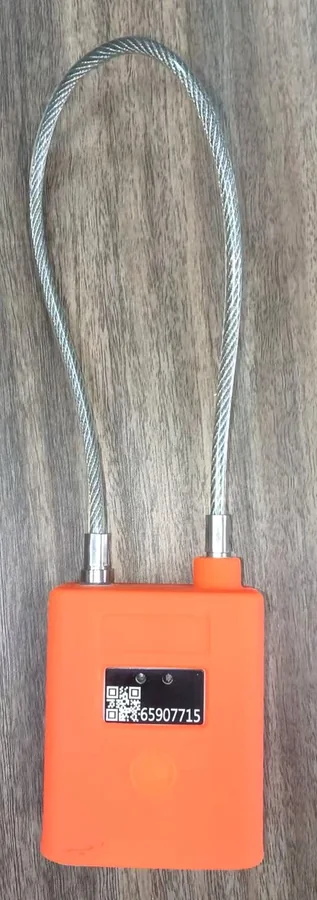
The cable goes through the door bar or hasp and is pushed home. The operator taps Lock in the app; a seating sensor confirms the cable is fully in. Closing the cable by hand does not lock it.
In transit
On the 4G and LoRa versions a cut or pry is reported at once. With the LoRa vehicle gateway every event carries the truck’s GPS position, and a seal taken off the vehicle drops out of range, which is an alarm in itself.
Release
At the destination the receiver requests the release. The platform checks person, place and time window. If any one does not match, the seal stays shut and the attempt is recorded.
Three versions of the same cable seal
Same locking principle, same steel cable. They differ in how the seal talks to your system, and that decides what else you need to install.
| Connects through | Opens with nobody present | Battery life | Best for | |
|---|---|---|---|---|
| ABD_BLE_806_QF Bluetooth | The operator’s phone. No SIM, no monthly fee | No — the driver opens it on site | Over 2 years standby | Sealing and audit where the driver is always there; lowest cost per seal |
| 4G-BLE-093 4G | Its own SIM, direct to the platform | Yes — released remotely from the platform | Over 12 months | Seals spread widely, each on its own; alarms that cannot wait |
| LORA_BLE_098 LoRa | A gateway per vehicle or site; one SIM per gateway | Yes — through the gateway | Over 12 months | Several seals in one place: a vehicle, a yard, a depot |
Battery life is at normal use and depends on how often the seal is operated and how often it reports; fleets that load and unload several times a day see less. The cell is replaced on site with the supplied spanner. All three run on the same platform and app, and one fleet can mix them.
Wherever a shackle will not reach
A steel cable threads through container locking bars, box-truck hasps, side doors and tail lifts, pallets and roll cages. On a vehicle with several doors, each door position is registered and authorised on its own. The cable is cut to the span of your lock point.
- Container rear doors — cable through the locking bar
- Box-truck rear and side doors, each authorised separately
- Pallets, roll cages and returnable containers
- Your logo, seal numbers and QR codes laser-marked at no charge
Frequently asked questions
Is the seal really reusable?
Yes. Released at the destination, it is ready for the next trip. Only the battery is a consumable, and it is replaced on site in minutes with the supplied spanner.
Do we need a SIM card in every seal?
Only on the 4G version, where each seal reports on its own. The LoRa version needs one SIM per gateway, not per seal, and the Bluetooth version needs none: the phone is the link.
What if the driver has no signal?
The Bluetooth version opens on the authorisation already on the phone and uploads the records when the signal returns. LoRa seals keep events in their own memory and upload them at the next contact with a gateway. Without coverage you lose the live alarm, not the record.
Can it tell an authorised release from a break-in?
Yes. A release goes through the platform and is logged with the person, time and position. A cut cable on the 4G or LoRa version raises an alarm at once, and an attempt to open outside the authorisation is refused and recorded.
Can we use our own tracking or fleet system?
Yes. Use our hosted platform — no platform fee, licence fee or per-call charge — call it through the API, embed our compiled SDK in your own app, or point the seals or gateway at your own server. See Platform & App and OEM / ODM.
Seals for this job
4G Electronic Cargo Seal
Steel-cable seal with its own 4G link. Cut and pry alarms reach the platform in seconds.
Learn more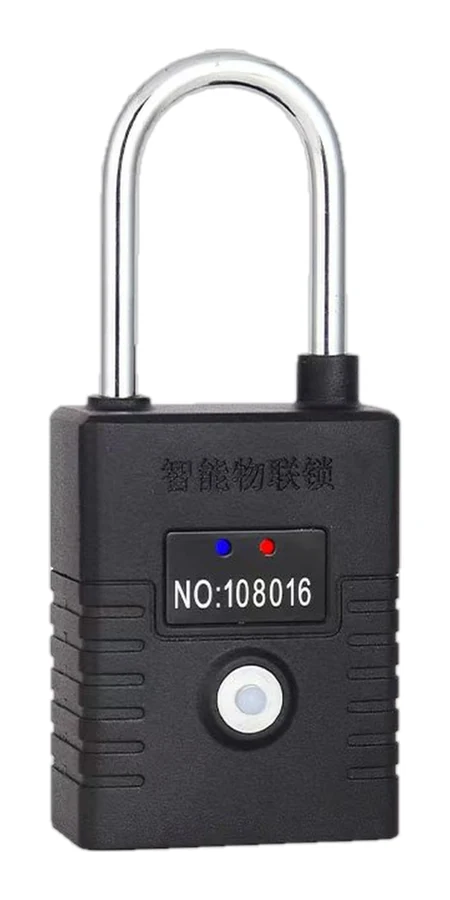
LoRa Smart Padlock
Shackle padlock or cable seal on LoRa. One gateway serves about 50 locks; no SIM in the lock.
Learn more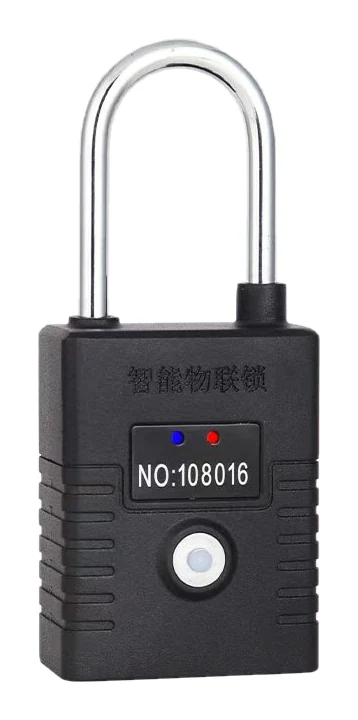
Bluetooth Padlock and Cable Seal
No SIM and no monthly fee. The operator's phone opens it on an authorised, logged permit.
Learn more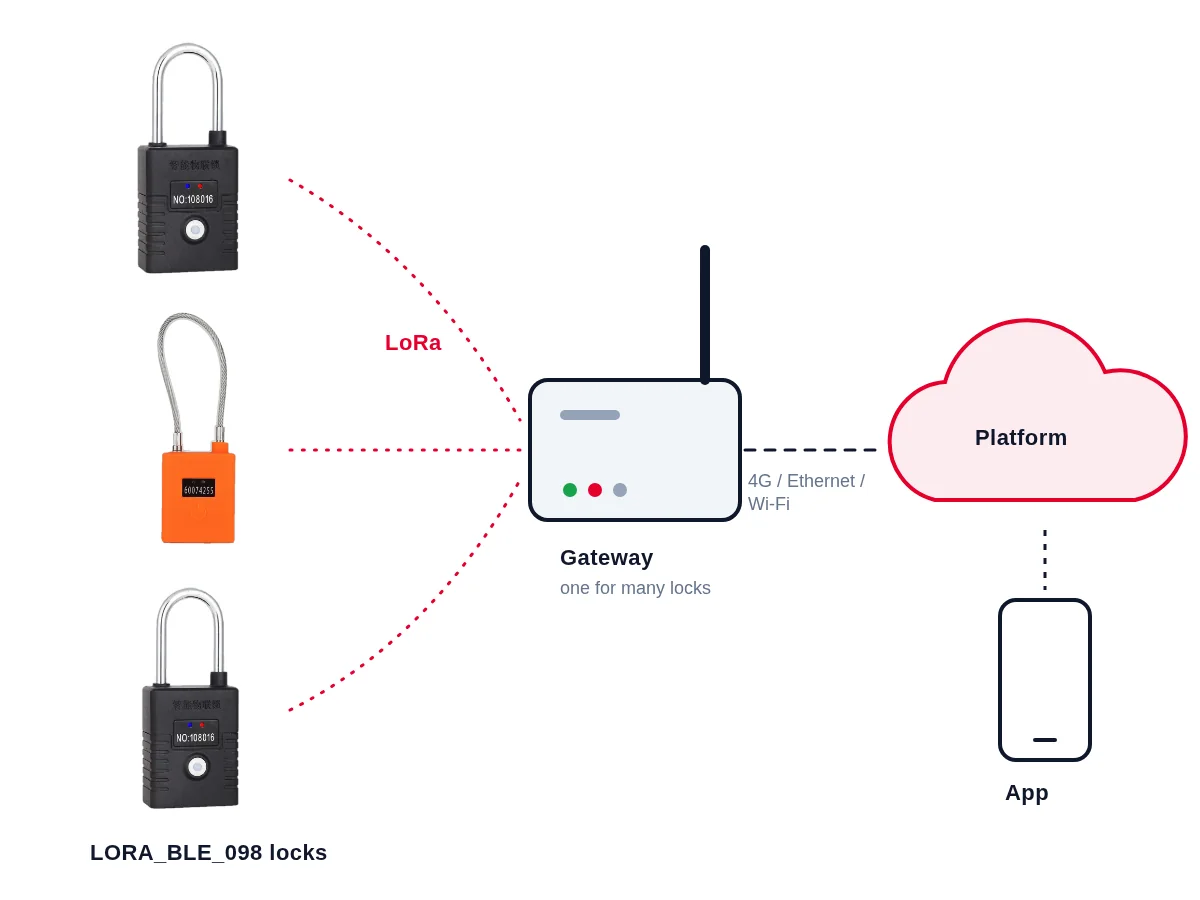
LoRa Gateway
Connects about 50 LoRa locks to the platform. Fixed-site on mains, or in the cab with 4G and GPS.
Learn moreTell us how your cargo moves
One seal per vehicle or twenty in a yard? Must a seal open with nobody standing at it? Send that, the lock-point span and the quantity, and we reply within one business day with a configuration and a quotation.