GPS Padlock with 4G and Keypad
A GPS padlock that reports its own position over 4G — no gateway, no phone. It opens on a single-use PIN typed on its own keypad, and that PIN goes to the people who hold the authority, not to the person standing at the lock.
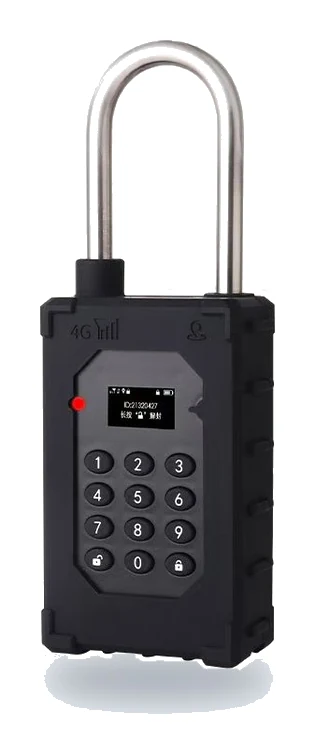
Access granted from a distance, accounted for centrally
For containers, yards, cabinets and remote plant where a third party has to be let in at short notice and the opening has to be on record afterwards.
GPS on board
The lock reports its own position over 4G on a schedule you set — every few minutes when a consignment is being followed, much less often when it stands for weeks.
The code goes to the authority
Asking for a code at the lock does not return one. The platform sends it to the app accounts bound to that lock, and they decide whether to pass it on.
Single-use PINs
Each PIN opens the lock once and is then spent. A code that leaks is worth one entry at most, not standing access.
No phone needed at the lock
The OLED display shows lock number, signal, battery and seal state; the keypad does the rest. The person opening it needs only the code.
Pry and disassembly alarms
Two separate alarms, both written to the platform record. Out of coverage they are held in the lock and uploaded when the connection returns.
Rechargeable, run time set by you
A 7,500 mAh rechargeable battery, charged in about six hours. How long it runs depends on the reporting interval you choose — see the figures below.
Four steps, two people on the record
The request comes from the lock; the decision stays with whoever holds the authority.
1 · Request at the lock
Hold down the unseal key. The lock asks the platform for a code over 4G.
2 · Code to the account holders
The platform sends a single-use PIN to the lock and to the app accounts bound to it — never to the person who asked.
3 · Code passed on
An authorised account holder passes the code on, by whatever means your process requires. It is typed on the keypad and the lock unseals.
4 · Open and record
Hold the unseal key again and the lock opens. The PIN is spent, and the record — who released the code and who used it — goes to the platform.
A container GPS lock that needs no phone
A heavy zinc-alloy body, a Ø10 mm shackle with a 42 mm span and 88 mm clearance, and an IP67 rating for permanent outdoor use. It fits container door bars, yard gates and cabinet hasps.
Plan for one thing: the lock needs coverage when the code is requested. Once the code has reached the lock, typing it in does not depend on the network, and records made out of coverage are uploaded later.
- Containers and yard security
- Utility and telecom cabinets
- Remote plant visited by contractors
- Any site where access is granted to a third party at short notice
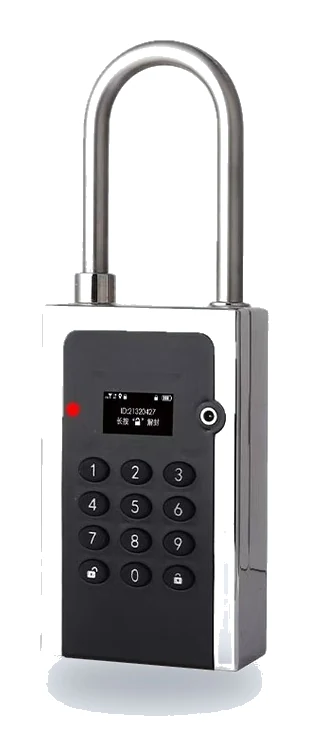
The same lock, with remote, Bluetooth and card opening
The GPS_4G_097 uses the same body, the same mounting and the same 12-key keypad as the GPS_4G_096. It adds three more ways to seal and unseal, so one lock covers dispatch-driven work, crews on site and jobs where nobody carries a phone.
Status: the 097 is in final development — the main board is being revised and the firmware finished. It is not yet available for orders. Ask us for the current date; a site built on the 096 can take 097s later with no physical change.
- Remote sealing and unsealing from the platform over 4G, with nobody on site
- Sealing and unsealing over Bluetooth with the operator on site
- RFID card opening, 13.56 MHz ISO/IEC 14443 Type A — card type confirmed before order
- Keypad single-use PIN, as on the 096
| Body size | 84.2 × 42.2 × 131.2 mm (W × D × H; 78.8 mm wide over the case) |
|---|---|
| Overall height | 229.2 mm with shackle |
| Shackle | Ø10 mm, 42 mm span, 88 mm clearance height |
| Shackle tensile strength | 5,000 N |
| Net weight | 1,050 g |
| Body | Zinc alloy; chrome plated, or rubber-armoured black |
| Protection | IP67 |
| Working range | −30 °C to +75 °C, 0–90 % RH non-condensing |
| Positioning | On-board GPS, within 5 m |
|---|---|
| Reporting | Scheduled, interval configurable (e.g. every 3, 5 or 10 minutes) |
| Cellular | 4G LTE Cat 1, LTE only — no 2G / 3G fallback |
| Bands (current version) | LTE-FDD B1 / B3 / B5 / B8; LTE-TDD B34 / B38 / B39 / B40 / B41 |
| SIM | Standard plug-in SIM, any operator, supplied by the buyer |
| Local radio | None — no Bluetooth, no card reader on this model |
| Opening | Single-use PIN on the keypad, released through the app to the accounts bound to the lock |
|---|---|
| Display | OLED: lock number, signal, battery, seal state |
| Keypad | 12 keys: 0–9 plus seal and unseal |
| Records | Lock number, PIN or operator, time, GPS position, result; export by lock, operator or date |
| Alarms | Pry · disassembly · low battery at 20 % |
| Out of coverage | Records and alarms held in the lock, uploaded when the connection returns |
| Battery | Rechargeable lithium, 7,500 mAh (three 18650 cells) |
|---|---|
| Charging | DC barrel plug, Ø3.15 mm centre pin; about 6 hours to full |
| Sleep current | Approx. 20 µA |
| Run time — low-power sleep | Over 5 months |
| Run time — reporting every 10 min | About 19 days |
| Run time — reporting every 3 min | About 4.5 days |
Frequently asked questions
Who receives the PIN?
The app accounts bound to that lock — never the person who asked for it at the lock. An account holder decides whether to pass it on, so every opening carries a decision by someone with the authority, and the record shows both who released the code and who used it.
Does the lock need mobile coverage to open?
It needs coverage when the code is requested, because the request goes to the platform over 4G. Once the code has reached the lock, typing it in works without a network.
Will it work on our carrier outside China?
The current production version carries Chinese LTE bands and has no 2G or 3G fallback. For another region the cellular module is changed for one with that region's bands, followed by the local radio approval, so a regional version is scoped separately. Tell us the country and the carrier.
How long does the battery last?
It depends on the reporting interval you choose: over 5 months in low-power sleep, about 19 days reporting every 10 minutes, about 4.5 days reporting every 3 minutes. Frequent openings shorten each figure.
The battery is rechargeable through the DC socket in about six hours, and a low-battery warning reaches the platform at 20 %.
Can the GPS_4G_096 be opened by Bluetooth, card or from the platform?
No — it opens only with a keypad PIN. Remote, Bluetooth and RFID card opening come with the GPS_4G_097, which shares the same body and is in final development. If you need a lock released from the office today, see the 4G smart padlock.
Can the lock report to our own platform?
Yes. Use our platform, which has no licence or per-call charge, call it through its API, or point the locks at your own server. See Platform & App.
Other ways to lock and track the same load
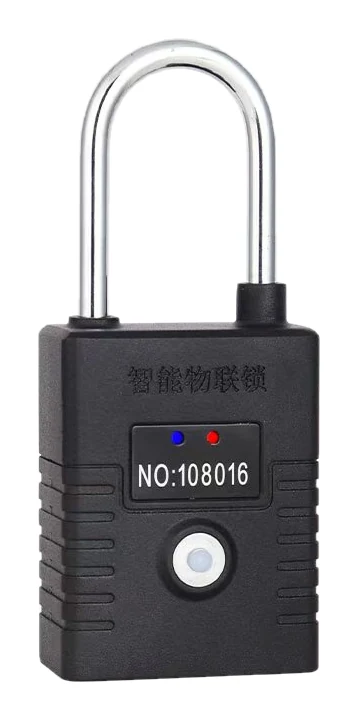
4G Smart Padlock
Shackle padlock with its own 4G link for gates, fences and cabinets on unattended sites.
Learn more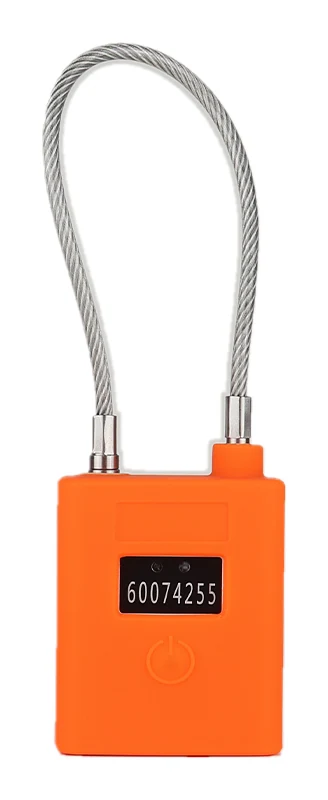
4G Electronic Cargo Seal
Steel-cable seal with its own 4G link. Cut and pry alarms reach the platform in seconds.
Learn more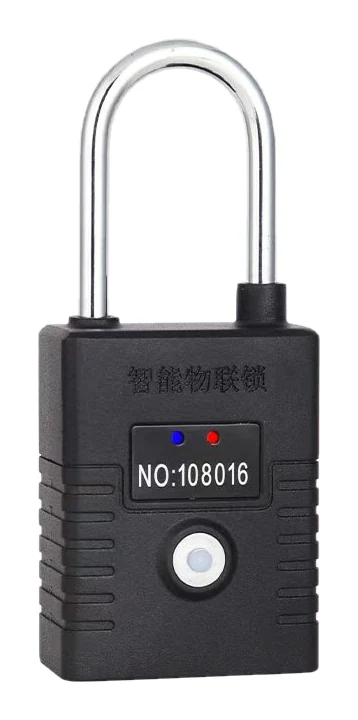
Bluetooth Padlock and Cable Seal
No SIM and no monthly fee. The operator's phone opens it on an authorised, logged permit.
Learn morePricing and samples for the GPS_4G_096
Tell us the quantity, where the locks will be used and the country and carrier they will run on. We reply within one business day with a quotation and the full specification.